October 27, 2025

First successful autonomous ‘dock2dock’ voyage demonstrated on river cruiser MS Lumière

A major, and global, milestone for autonomous inland shipping was reached on Friday 24 October 2025. During a live showcase on board Scylla’s brand-new passenger vessel MS Lumière, Shipping Technology, Retina, and Scylla successfully completed the first-ever autonomous Dock2Dock voyage – from undocking in Hardinxveld- Giessendam to docking in Gorinchem.

The demonstration combined Retina’s M-Pilot manoeuvring system with the ST BRAIN and Autonomous Lane Assist (ST Sailing) from Shipping Technology, enabling the vessel to undock, sail and dock autonomously under real-world conditions (even a gale-force crosswind of Beaufort 8 did not affect the ship’s course!). Throughout the route, the captain
remained in full control and supervision, always ensuring safety.

“With the Dock2Dock project, we’re proving that autonomous technology is no longer futuristic – it’s happening now. Safely, efficiently, and sustainably,” says David Woudenberg, Head of Product Development at Shipping Technology. “It’s not about removing the captain; it’s about giving crews smarter tools for safer and more efficient navigation. And about reducing fuel consumption.”

A first-of-its-kind demonstration
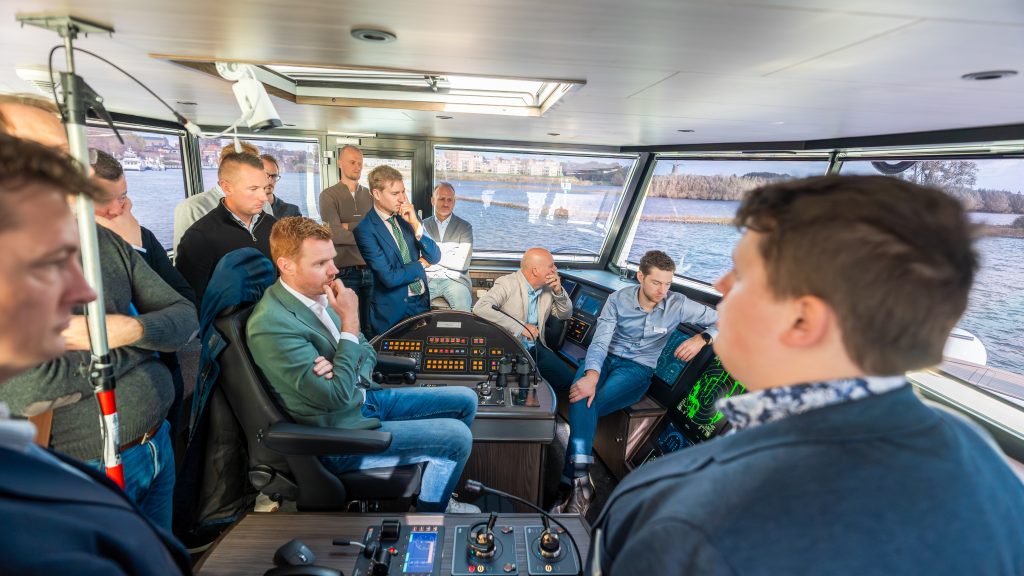
Stuurhut MPS Lumière. Foto’s Maritime Filming Group.

The live showcase demonstrated seamless cooperation between advanced maritime
systems:
● Autonomous undocking powered by Retina’s M-Pilot, in combination with Shipping Technology’s ST BRAIN
● Autonomous Lane Assist (ST SAILING) for the main trip
● Autonomous docking, with the captain overseeing each phase of the voyage

During the showcase, the Retina M-Pilot controlled both the thrusters and the engines of the river cruise vessel, working seamlessly with Shipping Technology’s ST BRAIN and Autonomous Lane Assist (ALA). Together, these systems guided the vessel along the optimal route from A to B, automatically managing rudder and pod movements with remarkable precision.

“This is particularly relevant for vessels with Z-drives. The system measures what happens 10 times per second, allowing controlled and safe operations. Experienced captains will have more time for other tasks; less experienced crew will feel better supported,” says Tom Panjer, Founder of Retina BV. “Also, and let me be very clear about this: reliable data is essential, but people must stay in control.”

Precision and control

The pilot system continuously factors in variables such as vessel load, engine RPM, and desired turning acceleration to determine the most efficient steering response. By integrating directly with the propulsion system – a major step forward – the technology now also opens the door to future ‘just-in-time sailing’, reducing fuel consumption and supporting more sustainable operations.

Tom: “The M-Pilot working together with the ST BRAIN performed exactly as intended, and that’s a true turning point for automation in inland shipping. The M-Pilot and ST BRAIN combination allows vessels to manoeuvre and sail autonomously while maintaining full control.”

The MS Lumière, operated by Scylla, entered service only two weeks before the event, making it the ideal platform to demonstrate how modern vessels can integrate advanced autonomy and data technology from day one. Following the voyage, guests, partners and media joined the crew on board for networking and discussions on the future of smart navigation.

From talk to action
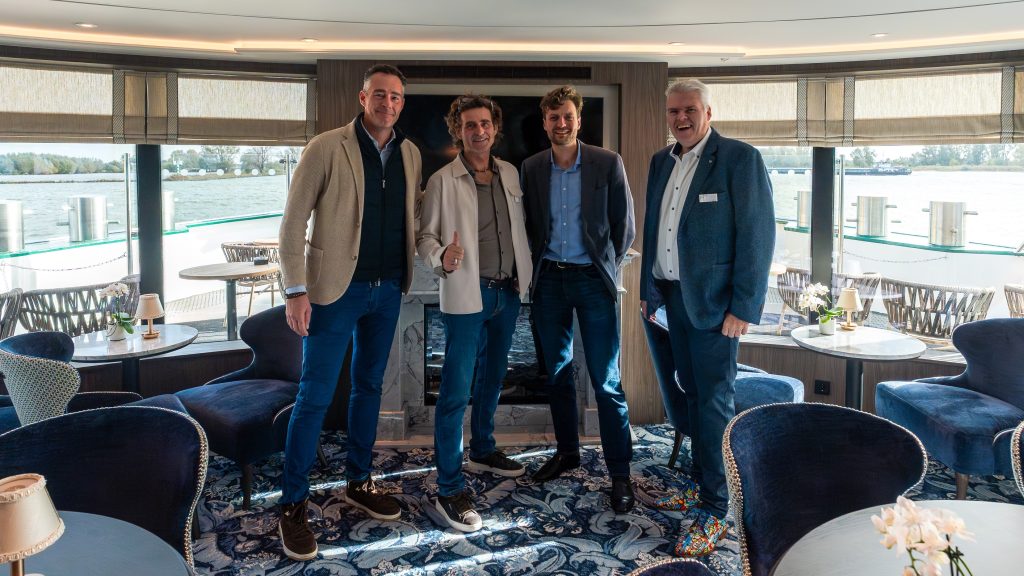
Remco Pikaart (Shipping Technology), Robert Reitsma (Scylla), David Woudenberg (Shipping Technology) en Tom Panjer (Retina) 

Tom: “In the market, there’s a lot of talk about autonomous sailing, but very little real demonstration, and most of that is about remote-controlled navigation. That’s why this
showcase matters. Normally, captains turn off their track pilot when approaching or leaving a berth – now, that process itself can be automated, with the captain staying fully in charge. It means more focus on navigation, less on manual controls, and a big step toward practical autonomy.”

One could say that Shipping Technology focuses on where you want to go and how you want to get there. Retina looks at how to control the vessel: making sure a ship arrives at its
destination in a controlled and safe way. “That’s the essence of our collaboration, says David.”

He continues: “I’m proud of our team and of showing what’s possible when companies focus on collaboration and learning, rather than on perceived future challenges.”
October 16, 2025

Radio Holland, Retina, and Shipping Technology join forces for a smarter future in inland shipping.

Rotterdam, October 15, 2025 – Radio Holland, Retina, and Shipping Technology are joining forces to take the inland shipping sector to a new level of innovation and efficiency. This collaboration creates a powerful one-stop shop for smart maritime solutions: from product development and data analysis to service, sales, and execution.

Within the collaboration, Retina takes the lead in innovation and product development. Shipping Technology focuses on data integration with the ST BRAIN, remote monitoring, real-time dashboards, and emission reporting — providing inland shipping operators and fleet managers with real-time insights into vessel performance and maintenance needs. Radio Holland contributes its global service organization, sales network, and execution power, ensuring that the solutions reach the market with the reliability the brand is known for.

By combining their expertise, the three parties offer a complete and future-proof ecosystem for inland shipping. Customers benefit from integrated technology, reliable service, and a single point of contact for all smart maritime solutions.

“With this collaboration, we’re charting a course toward the future together,” says Ronald Chatrer, Manager IWW at Radio Holland. “Our strengths complement each other perfectly. Together, we’re making smarter sailing truly accessible.”

The shared motto: “Smarter sailing starts here.”

About Radio Holland

Radio Holland is a global specialist in maritime electronics and services. With an international network of offices, engineers, and service locations, the company provides innovative and reliable solutions for navigation, communication, and automation in the maritime industry.

About Retina

Retina develops innovative technological solutions for the maritime sector, focusing on smart product development and the digitalization of inland shipping.

About Shipping Technology

Shipping Technology develops smart data solutions for inland shipping — from real-time insights and emission reporting to AI-based navigation — making sailing safer, smarter, and more sustainable.


January 30, 2025

Client Case: Salamanca

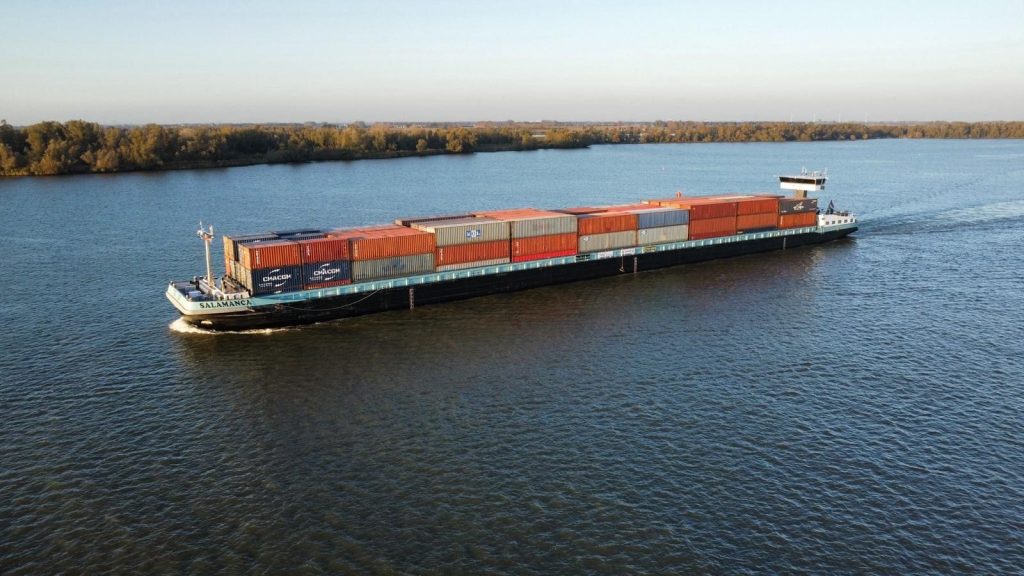
Danny van Deurzen is the proud captain and co-owner of the Salamanca, together with his partner Ilse van de Sanden. The Salamanca is a container vessel measuring 135 meters in length and 14.20 meters in width. With a capacity of 5,684 tons, it transports goods daily along the North Sea Port route, from Vlissingen to Rotterdam. For four years now, the vessel has been part of the Merlin Group fleet and has been sailing non-stop for charterer Danser.

Foto Salamanca.

From Tradition to Entrepreneurship

With inland shipping in his blood, Danny grew up in a family where vessels and inland navigation were central. “On my mother’s side, everyone comes from inland shipping. I’ve been involved since I was very young, without it ever really being the plan,” he explains. In 2000, together with a partner, he took the step toward owning his own tanker. Although that vessel was later sold, the desire for entrepreneurship never left him.

Through his uncle, Danny came into contact with Jan Kleine of the Merlin Group. After working together with Jan for six months, they decided to become co-owners of the old Salamanca. Two years later, they were given the opportunity to start a newbuild project. “We seized that opportunity with both hands,” he says proudly. And that’s how the current Salamanca became a reality.

Introduction to ST

Through Jan, Danny was introduced to Shipping Technology. “Jan had ST’s products installed on the Tripoli, one of the vessels of the Merlin Group. He was very positive about it: it works perfectly, you can monitor everything and track your consumption. Especially for the future of our clients, that’s important, because they want to be able to monitor emissions per tonnage,” he explains.

At the Maritime Industry trade fair, they visited the Shipping Technology booth. “We received an explanation there, and I found it to be a very advanced system. We already had a track pilot from a competitor, but ST’s system was truly a complete package. The decision to install it on the Salamanca was quickly made,” he says. Since January 2024, the Salamanca has been using all ST products.

Autonomous Lane Assist (ALA) in Action

On the Salamanca, Danny makes extensive use of the ALA: “To be honest, I use the ALA the most — actually on a daily basis.” Especially on long stretches like the Westerschelde, the ALA is indispensable. “You switch it on and of course you keep an eye on everything, but it tracks everything perfectly. It stays right on course, even in the fog. I think it sails more precisely than I would myself,” he admits.

The ST ALA uses historical data and AI to enable autonomous sailing within a smartly generated track, entirely independent of an internet connection. The captain doesn’t need to configure anything; he can simply plan and activate the route.

According to him, the ALA has not only increased comfort but also safety: “The ALA calculates everything in advance and gives timely warnings of potential collisions. Of course, it remains a tool; the system signals you, but you’re still in charge. For now, it’s a valuable assistant on our routes.”

The Future of Autonomous Sailing

Initially, Danny was skeptical about autonomous sailing. “I thought it was a big fantasy story. My first thought was: yeah, right. At first, it takes some getting used to, but now it feels very familiar, and you can see that it’s all possible.”

Although he is enthusiastic about the technology, he remains realistic: fully autonomous sailing is still something for the future. “There are still some updates needed before we can truly talk about fully autonomous sailing. But I do believe this is the future. It’s coming closer faster than you think,” he says. Especially given today’s staffing challenges, Danny sees autonomous sailing as a very promising solution for the future.

Evidence Against Incident Accusation

In the Margriethaven near Rotterdam, the Salamanca found itself in a difficult situation after an accusation that caused much uncertainty. “We were waiting at the Maasvlakte around midnight when our daughter came running into our room, saying that we had broken loose,” he recalls. He rushed upstairs to start the vessel, and once it was secured again, the neighbor accused the Salamanca of having caused damage by breaking free. “We immediately had a bad feeling about it,” says Danny.

Afterwards, Danny remembered that ST had stored the camera footage. “We called ST and explained our situation. They reviewed everything and sent us a clip of that specific moment, including all the camera footage and data,” he explains.

The evidence was crystal clear: “The footage shows that something had already been happening with the neighbor’s vessel for half an hour, while we hadn’t done anything. The neighbor had moved his vessel using his engines, which caused the Salamanca’s ropes to break. Thanks to ST’s systems, we were able to see exactly what had happened,” he explains.

The footage was crucial for the insurance company, which immediately recognized what had actually happened. “The data doesn’t lie. In a situation like this, I’m glad we have a system that makes everything visible,” he adds.

In conclusion, Danny adds: “ST really asks what the customer wants and builds on that. That feels reassuring,” he explains. For him, the human aspect is just as important: “It’s about working with people, and that personal contact makes the difference. You can see the passion behind it, and that’s what I value most about Shipping Technology.”

Do you want to take your fleet to the next level?

Curious how our technology can make your vessel more efficient, safer, and more sustainable?

Get in touch
October 3, 2024

Client Case: Tricolore

Richard Driessen is co-owner and skipper of the Tricolore, a tanker measuring 135 meters in length and 17.55 meters in width, with a carrying capacity of 8,700 tons. The Tricolore is part of Driemaas Shipping BV and primarily operates in ARA traffic.

Mts Tricolore. (foto Maritime Filming Group)

The collaboration with Shipping Technology started through an old acquaintance. Richard Driessen explains: “I’ve known Remco Pikaart (Founding Partner of Shipping Technology) since the time he was still sailing himself. When he started Shipping Technology, I wasn’t immediately enthusiastic; back then, I didn’t believe in autonomous sailing. At first, I thought: semi-autonomous sailing, how could that possibly work? But that’s exactly what Shipping Technology set out to focus on. Now, so many more aspects come into play, and I think it really is going to happen. You also have to move along with technology. I find technology very fascinating, but it has to remain realistic.”

He adds: “Remco is someone from the trade, and I believe those people understand it better than those who create something without knowing the craft or having any background in it. And that was the reason for me to say: we’re going with Shipping Technology.”

The Tricolore has been using the ST BRAIN for several months now, and Richard shares his experiences:

“With the ST BRAIN and the Dashboard, you get an impressive overview of all the data. It’s amazing how everything comes together. Thanks to ST’s products, we’ll soon no longer need a logbook; everything will be integrated.”

He also explains the added value of the ST BRAIN: “In emergencies, such as incidents, the ST BRAIN provides the ability to see exactly what happened. We had a minor incident and were able to analyze afterwards what had occurred. We could see everything, such as the rudder position and pilot mode. It turned out the pilot was giving incorrect signals, so the next day we immediately replaced the pilot and the problem was solved.”

Richard also uses the ST BRAIN for operational and emissions reporting: “Soon we’ll be required to demonstrate our footprint. We’re already using the reporting tools to share the values with our charterers. All it takes is the push of a button, and the data is instantly available. It’s continuously monitored. If you need the values for a specific period, you can get them right away. Even during loading and unloading, or when the vessel is idle, it automatically keeps going. I think it’s a really great system.”

Recently, the Autonomous Lane Assist (ALA) was installed on the Tricolore, in combination with the new Alphatron Pilot. Richard Driessen explains: “We are the first to have the new Alphatron Pilot. I haven’t sailed with the ALA myself yet, but our crew has, and I believe the ALA will provide me with comfort in the future. It’s not that you no longer have to pay attention, but it does give a sense of reassurance. And I think at some point it will actually navigate better than we do. The ALA is always active, while we humans can sometimes get distracted. In addition, it saves fuel and makes the vessel more efficient — those are definite advantages.”

Richard continues: “Even when sailing in poor visibility, you can focus more on the radar image and only need to check whether it’s functioning properly. We take on a supervisory role, while the ALA does the sailing for you.”

The choice for the ALA and Shipping Technology was clear to him: “The reason we chose the ALA and ST is that there’s someone behind it who truly comes from the trade. And I believe the ALA will reach autonomous sailing faster than the rest. I have more confidence in it.”

June 12, 2024

Belgian Client Case: Vera Pax

Fabian de Wachter is the captain and owner of the Vera Pax, a vessel measuring 183 meters in length and 11.45 meters in width, with a carrying capacity of over 5,500 tons. The Vera Pax is part of a fleet of four vessels and sails across vast regions, from the North Sea to the Black Sea. As an experienced skipper, Fabian navigates with his push convoys, focusing on the transport of grain and other dry bulk goods.

Vera Pax

Fabian reflects on the moment he first came into contact with Shipping Technology. “That must have been around 2020, when I met Remco (Founding Partner of Shipping Technology). The way he approached it, drawing from his own experience as a skipper, and how Shipping Technology started experimenting, immediately gave me the feeling that this was the right long-term approach.”

The choice for Shipping Technology, and specifically for the ST BRAIN, was a logical step for him. “I found it very interesting. They first started developing the ST BRAIN, and afterwards we were among the first to experiment with the Autonomous Lane Assist (ALA) in 2022. But especially today, with the ST BRAIN helping us record incidents and collisions, I truly see it as a reassurance.”

On using the ST Dashboard, Fabian explains: “For me, it’s not necessary to constantly dive into the dashboard.” Still, he acknowledges the potential of the ST BRAIN with a growing fleet: “When you’re managing an entire fleet, it naturally becomes more interesting. And when working with external crew, it’s quite useful to look back. What were the conditions, how hard were the engines running compared to the speed, and so on.”

He adds about the usefulness of the ST BRAIN in emergencies: “It is essential to be able to record collisions and similar incidents. During a nighttime collision that initially went unnoticed by us, we were able to track down the culprit afterwards thanks to the ST BRAIN.”

Fabian explains how the ALA is used on board. “It brings peace of mind,” he notes, reflecting on the vast regions they navigate — from the Rhine to the Danube, from simple to complex routes. “On the easy stretches, the ALA provides a sense of reassurance, while on the more challenging stretches I still prefer to sail myself and take control, simply because I enjoy it.” However, he also acknowledges the risks of human inattention. “We see more accidents happening on the easy stretches. Accidents often occur when you least expect them, when alertness drops. That’s where the ALA helps, taking over for a moment when needed.”

Fabian has a clear opinion on the future vision of autonomous sailing. “Fully autonomous sailing — I don’t see that happening anytime soon. Tools like the Autonomous Lane Assist are exactly that: tools that make sailing easier,” he explains. Fabian views these technologies as additions that provide peace of mind and comfort, but he warns that they should never replace the essential knowledge and skills of the skipper.

In a world where computers are becoming increasingly intelligent, he emphasizes the need to cherish the art of sailing. “Sailing remains a craft,” Fabian says. “At some point, computers will truly become smarter than we are, and a great deal of knowledge will eventually be lost. Navigating through flowing rivers, maneuvering a vessel through a lock, mooring a ship — that remains a craft. But we must be careful that technology doesn’t cause us to lose our profession.” For Fabian, the real challenge lies in finding a balance where technology supports craftsmanship without overwhelming it.

He concludes with a powerful statement: “Craftsmanship cannot exist without technology, but technology certainly cannot exist without craftsmanship. And that’s where we need to find the right balance.”

March 27, 2024

Dutch Client Case: MTS Otter

Willem-Jan Otterspeer operates the MTS Otter, a vessel measuring 110 by 11.40 meters. The MTS Otter, specialized in transporting liquid cargo, navigates through the vast ARA area and along the waters of the Rhine.

The collaboration with Shipping Technology began back in 2020, prior to the vessel’s official launch. Willem-Jan shares his experience: “In 2020 we started discussions with Shipping Technology, drawn by their forward-looking vision on maritime technologies. Their concept of using the ST BRAIN to transmit and collect data, enabling us to adapt to the rapidly changing digital infrastructure, convinced us to integrate the ST BRAIN into our newbuild.”

Willem-Jan talks about the ST BRAIN: “The accelerated playback of a route (radar image, navigation chart, rudder position/turn indicator, engine power, draft under the vessel) during the training of novice skippers is particularly useful for answering questions or discussing potentially hazardous routes. It’s also helpful for administrative tasks, such as preparing a port bill or identification documents, as it allows for quick review.”

Since then, Shipping Technology has continued to innovate, introducing the Autonomous Lane Assist, an AI-driven semi-autonomous navigation tool. Willem-Jan explains: “From the start, the ST Autonomous Lane Assist was a fascinating addition. It took some getting used to, letting go of the autopilot, but the practical support from Shipping Technology quickly gave us confidence after commissioning. Now it’s a tool we use regularly. The system is straightforward and features an intuitive user interface. Especially on longer routes, it’s a valuable addition that reduces workload.”

Within the vision of a future of fully autonomous sailing, the MTS Otter team recognizes the important steps being made toward semi-autonomous navigation. “When we look at fully autonomous sailing, it still seems far away,” Willem-Jan notes. “Many steps are needed to make semi-autonomous sailing even safer and more comfortable. For example, improved communication between vessels and with traffic control centers is required, and regulations need further alignment. With the right developments, however, significant progress can be achieved.”

In conclusion, he adds: “We appreciate sailing with Shipping Technology’s system, which not only digitizes the navigation and operation of inland vessels but also truly drives innovation and progress in the maritime sector.”